
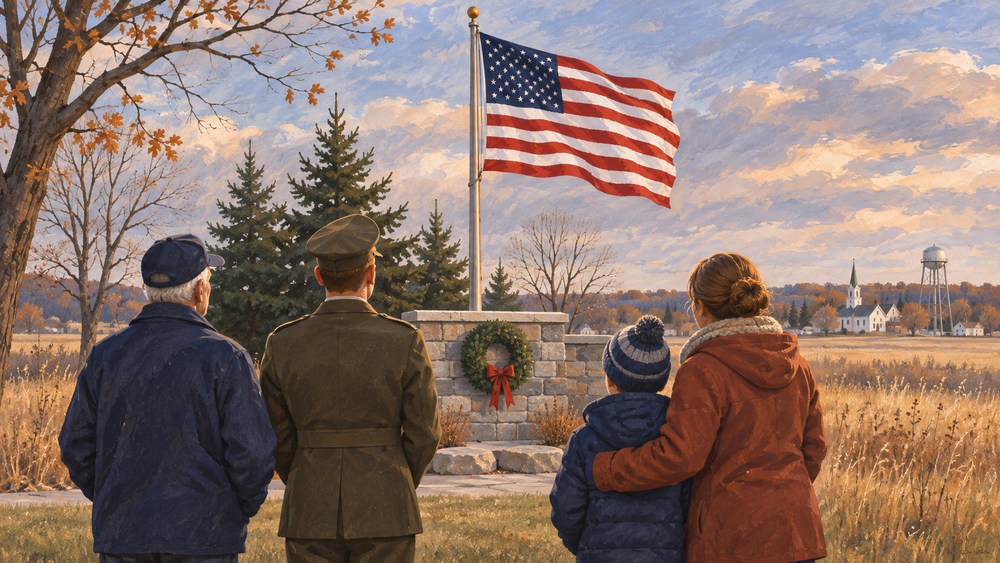
On November 11, E.C.H.O. Charter School joins communities across the country in observing Veterans Day. The holiday honors all who have served in the United States Armed Forces, whether in wartime or peacetime.
How Veterans Day Began
At 11 a.m. on November 11, 1918, the Allies and Germany stopped fighting on the Western Front of World War I under an agreement known as an armistice.
President Woodrow Wilson called for the first U.S. observance of Armistice Day in 1919. Early plans included parades, public gatherings, and a brief pause in business at 11 a.m. to mark the hour the fighting had stopped. Congress made Armistice Day a federal holiday dedicated to world peace in 1938.
After World War II and the Korean War, President Dwight D. Eisenhower signed a law in 1954 renaming the holiday Veterans Day to honor veterans of all wars. In 1971, the federal observance moved to the fourth Monday in October, while many states kept November 11. President Gerald Ford signed a law in 1975 returning the holiday to November 11 beginning in 1978, preserving its link to the armistice.
The national Veterans Day observance includes a wreath-laying at the Tomb of the Unknown Soldier at Arlington National Cemetery in Virginia. An unidentified American soldier from World War I was laid to rest there on November 11, 1921.
Honoring Service in Our Community
Military service can mean caring for patients, repairing vehicles, or responding to emergencies close to home. During flooding in 2024, for example, Minnesota National Guard soldiers helped the city of Waterville transport emergency equipment.
Veterans Day gives our students a chance to connect what they learn in history class with the experiences of people in their own families and communities. If a veteran you know is comfortable sharing, ask what they’d like young people to understand about their time in the military. A question about a job they held or a skill they learned can help start the conversation. Students can also mark the day by writing a thank-you note to a veteran.
Military service can also ask a great deal of families. During a deployment, loved ones may take on extra responsibilities at home. After a move, they may help children settle into a new school while getting to know a new community themselves.
To the veterans in our community and across the country, and to everyone serving today, thank you for your service. We are also grateful to the military families who support you.
Learn more in the U.S. Department of Veterans Affairs’ history of Veterans Day.
See also the history of the Tomb of the Unknown Soldier and the Minnesota National Guard’s 2024 annual report.